This week in gardening we are in the midst of the spring-to-summer transition. Memorial Day in the rear-view mirror, the Fourth of July on the near horizon. It is prime planting season. We are pruning fast-growing trees and shrubs after spring bloom, pinching and cutting back perennials, mowing the non-stop turf non-stop, paying careful attention to watering and — oh, the bugs are out! So it is time to be on the lookout for infestations that can take hold with extraordinary speed at this time of year.
It is time for addition, subtraction, division, arranging, and rearranging through the long days of the growing season and the clement weather ahead of blazing days in the later summer.
It is a lot of choices and logistics about what, when, and how to keep it all moving forward at the right pace.
At some point the season will stop asking, 'what am I going to do?' and start asking, how am I going to tend to what I've already chosen?’. But right now, it is all decisions and action.
At this time in the season, most gardeners are making a great many decisions. And not every decision can be made with absolute confidence.
Perhaps plants were moved because they seemed unhappy where they were. Others were maybe left in place with the hope that another season might reveal something different. A few (or many) purchases were made on instinct, impulse, or speculation. Some jobs were started and completed (or not) simply because the schedule insisted, not because certainty arrived.
Gardening rarely offers the luxury of complete information.
We do not know how much rain will fall in July. We do not know whether rabbits will discover a newly planted bed. We do not know if a promising young shrub will thrive, struggle, or surprise us. We make decisions anyway.
We also have to set boundaries. I often say our gardens are like children. They will ask for all your time and all your attention and all your money, then ask for more. It is important to know how and when to say, 'that's enough now'.
I work almost non-stop at this time of year. I often tell people that my days off are rain days and Sundays (sometimes not even those). Recently I did have the better part of a day off and came across an article about the work of Herbert Simon, a psychologist and economist in the NY Times (I'll share a link below).
He observes that in this age of 'information and choice abundance’, some feel they can find the best answer for everything if they look long and hard enough. His suggestion is that constant searching for best possible answer is the wrong goal. The act of searching itself requires a lot of energy, and most people forget to account for it. Instead, he argues that most of life's choices can be made happily with less effort. The goal is not to get mired in trying to find the best possible answer among a myriad of choices, but in accepting the good enough answer that allows us to move forward.
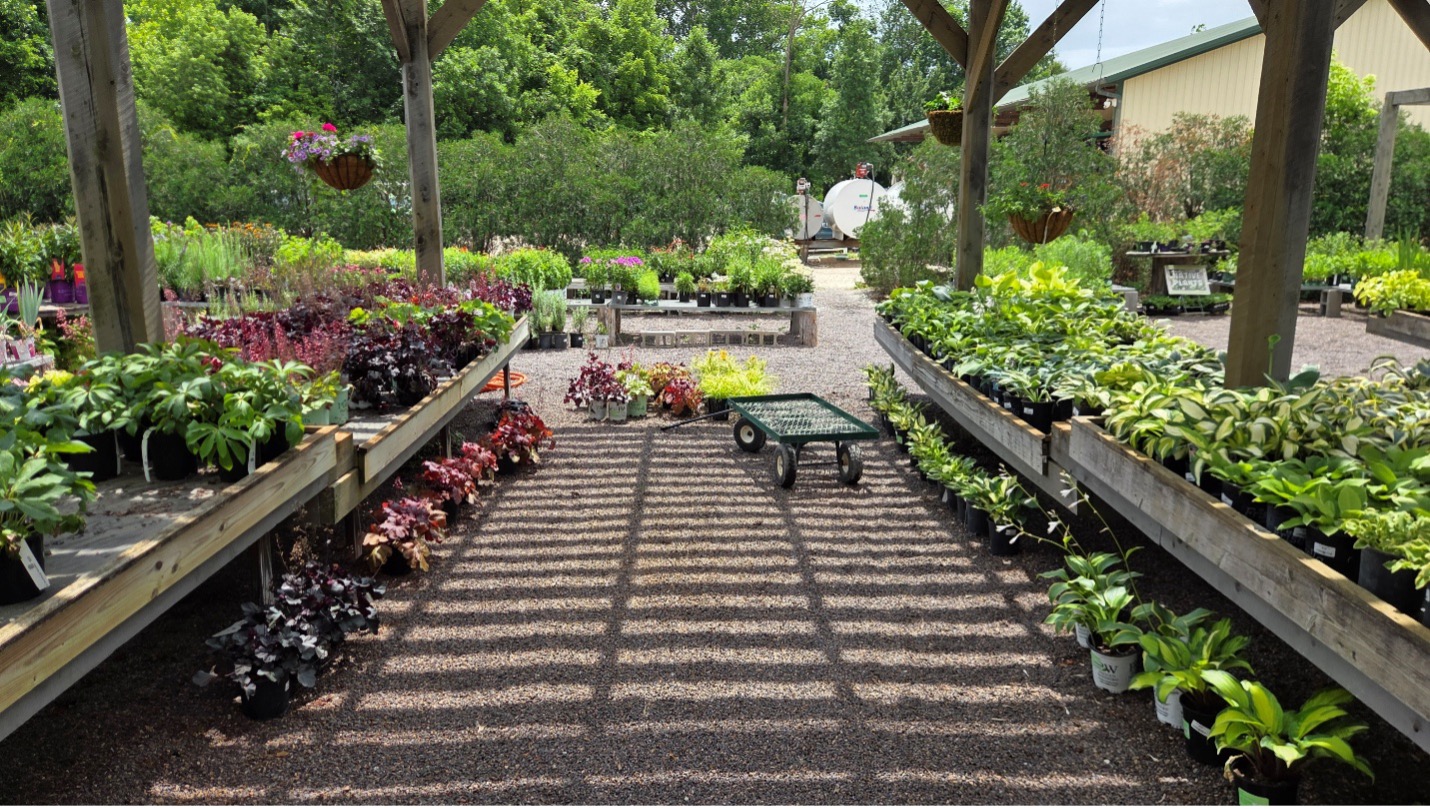
Think about choosing a shrub or set of perennials for your garden. You can spend three evenings comparing cultivars, reading reviews, and worrying over mature size, bloom color, and fall foliage. Pull out the books, do the online research, talk amongst your gardening friends. But, you know what? If the nursery doesn't carry what you have researched and imagined, you are up a creek. Better to shop it out and see what is available when you need it, choose a healthy plant that meets most of your needs, get it in the ground, and let this reasonable and available choice inform the next one. Gardens rarely reward endless deliberation as much as they reward thoughtful action.
Simon refers to this as 'satisficing' — a combination of satisfy and suffice. A way to think about making decisions with a limited set of options, choosing one that is good enough, and moving on to what comes next.
Good gardeners practice this constantly whether they know the term or not.
The gardener who waits for perfect certainty rarely plants anything. The gardener who demands complete knowledge before acting will miss a seasonal window altogether. Gardens grow and develop and find their way not because every decision is correct, but because decisions are made, observed, adjusted, and made again.
I could probably go on, but perhaps this thought can ‘satisfice’. The season is moving quickly, and decisions are waiting. Make a reasonable choice, plant something, and see what happens. Plus, you’ve got a bit more reading to do – which I hope you will take to heart :
https://www.nytimes.com/2026/05/12/opinion/decision-making-herbert-simon.html