Misinformation
This week I was out in the woodland section of one of the gardens - a steep slope falling away from the house that has been resigned to a quality of care we like to call 'managed neglect.' Not really visible from anywhere on the property, it holds a big messy productive compost pile, gets a walk through with the arborist now and again to fret over the big trees, and otherwise, a few times a year, we go down and pull invasives and weeds and just kind of let it be. These spaces kinds of are a real luxury, especially in urban settings where every square foot can become precious. it is nice to have room to let things be a little wild.
that said, managed neglect is not neglect!
I was having a walk through, primarily to scout for poison ivy. We had a rash (pun intended ) of it several years ago and while I have it well managed, one of my associates had a rough time of it with an allergic outbreak of it in the early spring and I am feeling particularly sensitive to make sure it does not happen in one of our professionally cared for gardens - to her or anyone.
I spotted a couple of small patches, either returning from old root stock or from seed dropped by the birds and marked them for herbicide. Then I spotted another three leafed menace --- kudzu! Yikes.
If you don't know - kudzu is a terribly invasive vine. It was introduced to the U.S. from Asia around the turn of the century as an ornamental, then later heavily promoted by the government as a solution to soil erosion after the dust bowl era, particularly throughout the south where farmers were even paid to plant it. Problems emerged quickly. with its incredible growth rate, ability to root along its stems, and tolerance for poor soils and drought, it began swallowing entire forests, barns, utility poles and abandoned buildings.
By the 1970's the government had reversed course, and by the mid 1990's kudzu was officially listed as a federal noxious weed. but too late - it had already spread across huge regions of the south and beyond.
And now it is in the woods of one of my gardens! It showed up last year and we spent a day tracing back the long ropy vines to their origin points then herbicide to try and kill at the base. This recent survey revealed just a bit of new activity.
So now to get back on track to the title of this bulletin - misinformation. Because i was really only looking for poison ivy, and because both have 3 leaves, I decided to put the kudzu through the plant identifier on my phone.
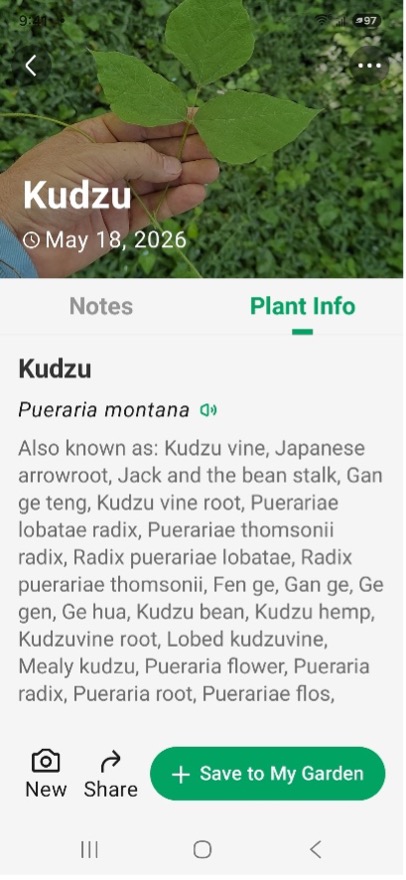
I am going to name the AI identifier I use. I subscribed to "Picture This' a few years ago when i was spending some time in Florida and wanting to learn a little bit about the horticulture there. It is (was) a handy, simple app, surely imperfect, but I know enough to know when an ID is wrong, even if i don’t know that the right answer is, so I'm good with it for some occasional prompting. Recently the app 'upgraded' to include more features - tips for care, etc...i don't know, I had not been paying attention. then this:
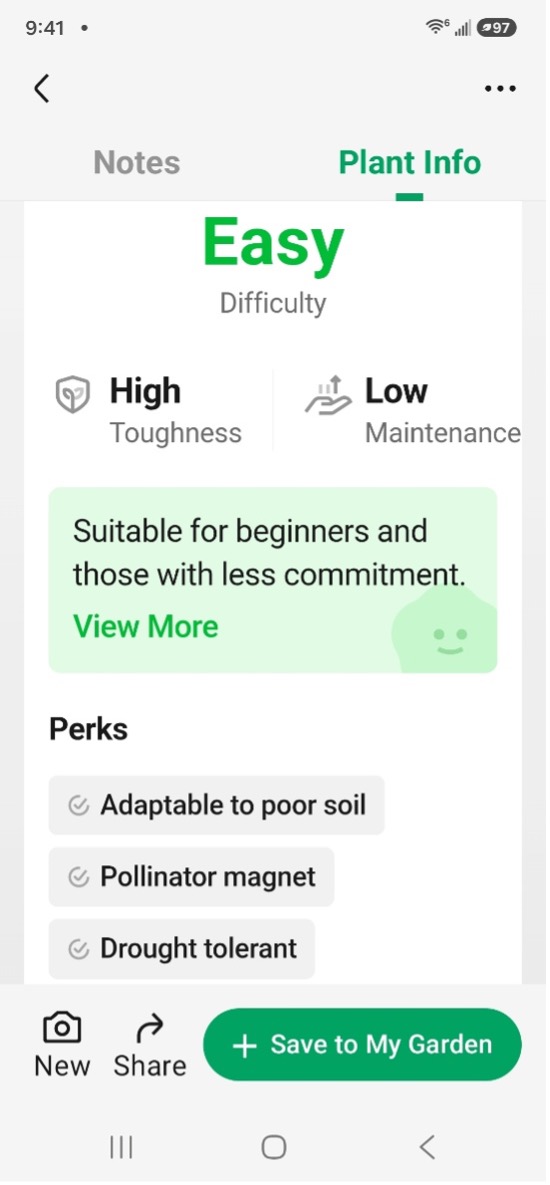
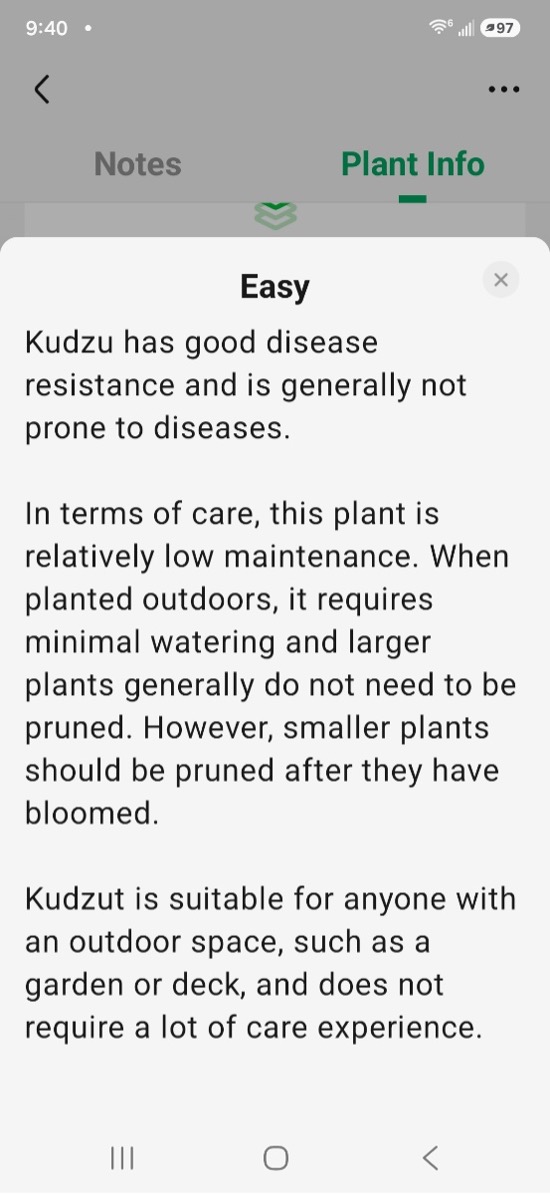
!!! To be fair, elsewhere in the description of this “federally noxious weed” it does describe it in less glowing terms, but to give care tips like the above...that is serious misinformation! It made me think — how do we get good credible garden information?
There is a world of garden information out there - books, nurseries, public gardens, garden professionals, and yes, even AI. Figuring out what and who to listen to can be a conundrum. Whether you are a hobbyist gardener or a professional, finding good resources is incredibly valuable. I’m going to list a few of the ways I try to keep myself informed, and I would be curious to hear your recommendations as well.
BOOKS
There are so many garden books in the world! A lot of very beautiful 'picture books' with fantastic photography of amazing gardens and they are great for inspiration. But for information - these are my valued textbooks!
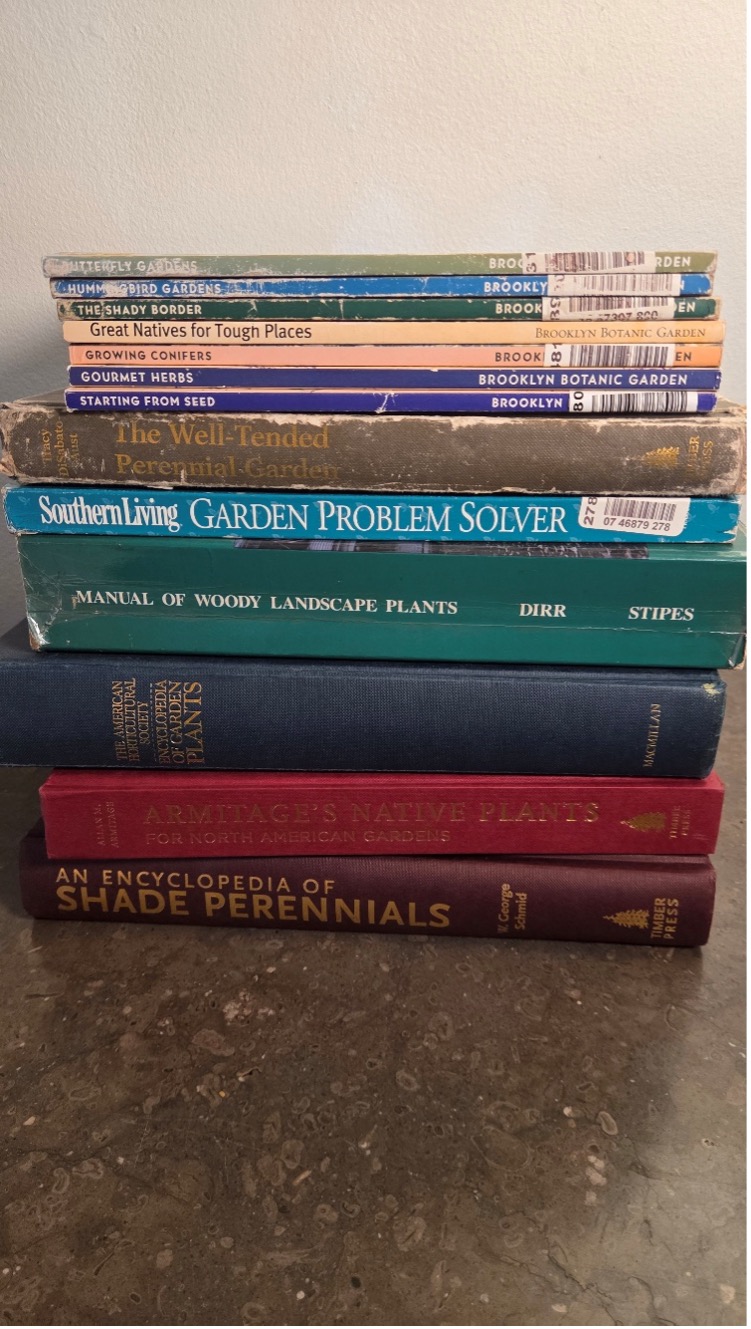
Manual of Woody Landscape Plants - Dirr (this is kind of the bible for the serious horticulturist)
National Arboretum Book of Outstanding Landscape Plants (not pictured - I’m sure I’ve loaned it out – who has it?)
Southern Living Garden Problem Solver (this one I keep in the truck)
The Well Tended Perennial Garden - Disabato-Aust (also truck worn)
Brooklyn Botanical Garden 'Field Guides' - (these are wonderfuland practical, I try to collect all the topics)
The others pictured - encyclopedias really - academic but are excellent - Armitage’s Native Plants, AHS Encyclopedia of Garden Plants, and An Encyclopedia of Shade Perennials - Schmidt
These are my go to's, references and cross references. Please share yours in 'The Gardener's Stream'
NURSERIES
Building relationships with good nurseries and nursery people can be incredibly informative. By spending time regularly at nurseries one can learn about seasonality, bloom cycles, and see what is new in the horticultural world. Plus, everything is well tagged, so it is a great place to learn plant names and requirements. Finally, the folks who work at nurseries can be fantastically knowledgeable - they see a lot and answer a lot of questions. I have nursery friends whom I have known for years and consider valued colleagues.
PUBLIC GARDENS
While you can always see what is new in the nursery world, it is through visits to arboretums, public gardens, and even cemeteries that one can see what is old. There is no substitute for observing time and age and scale - to remind us that what we are working on and planting will (hopefully) be in place for a long time and eventually grow into shapes and sizes that are not really comprehensible when you are procuring baby nursery plants.
There is also something grounding about seeing mature landscapes in person. Gardens have a way of slowing information down. They remind us that not every answer needs to be immediate, and not every confident opinion is correct.
To sum up, I guess what I really want to stress and am trying to say is that there is a world of garden information out there - and the best way to access it is to use it all! Go ahead and use your AI plant identifier, but please follow up with your knowledgeable nursery professional to discuss. Take a walk around an arboretum then come home and look up a couple of the trees you saw. Come to 'Office Hours ' at GARDEN CLUB and ask a couple of questions. Using all the sources and references available to get to the right conclusions will keep you from making regrettable choices...and please don't plant kudzu!!!