Liriope and Hellebores
Over the winter, and now at the start of spring, one of our first chores is cutting back liriope and hellebores throughout the gardens.
It’s a project we often begin in the occasional warm workable winter days, then turn up the pace as spring starts to arrive. By this time evergreen leaves of the perennial hellebores and the ubiquitous groundcover liriope start to look rough. There’s also the practical benefit that this ‘green’ material helps balance the compost pile, which at this time of year is full full of dry leaves.
Mostly though, it’s nice to get this work out of the way during the relatively easy days before the real rush of spring.
Helleborus
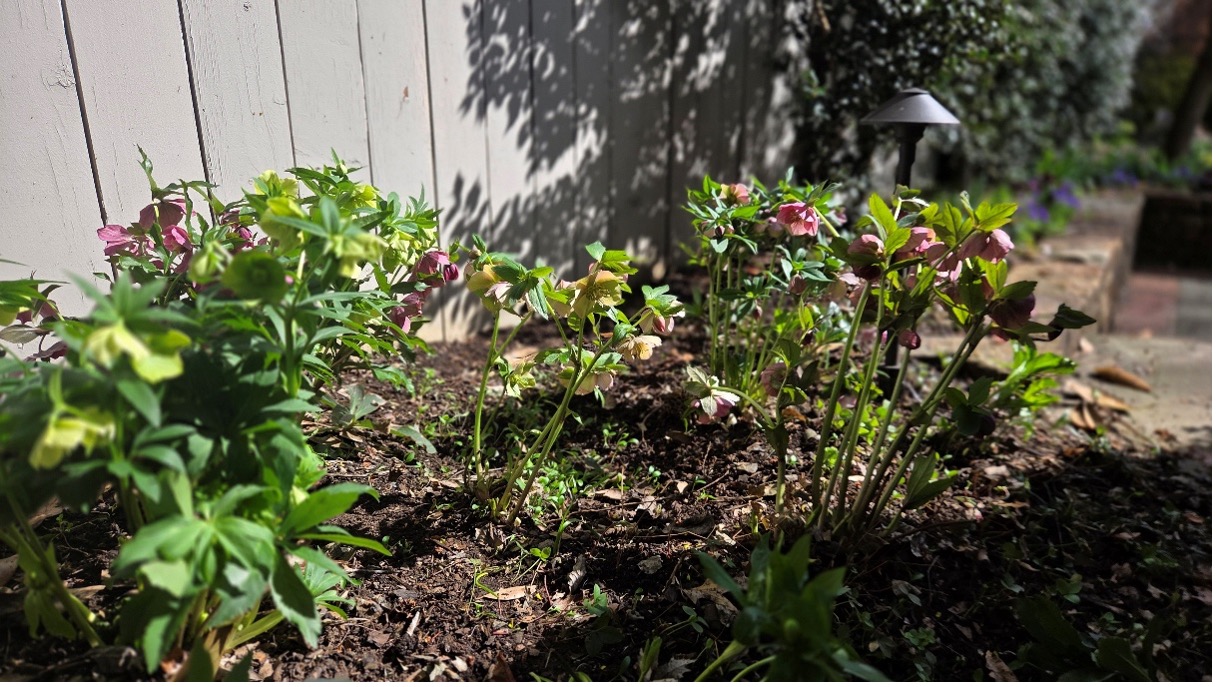
First off — as many of you know, there are several species of Helleborus, and about a billion subspecies and varieties. I’m not going to nerd out about that here (please do that in The Gardener’s Stream!).
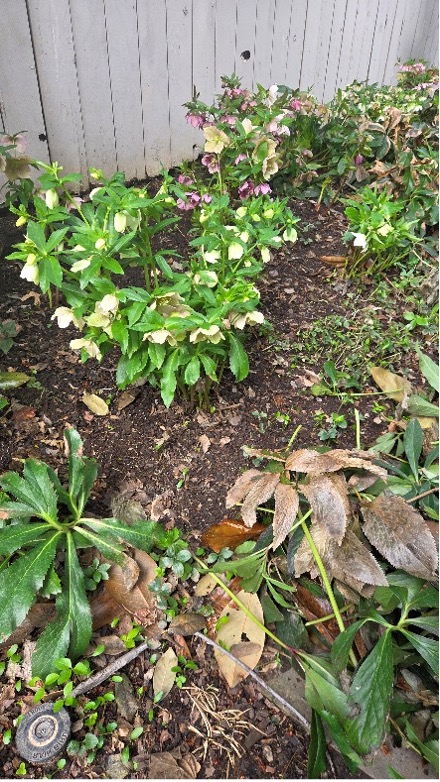
For this bulletin we’re talking about Helleborus orientalis hybrids, collectively referred to as Helleborus × hybridus — commonly called Lenten rose.
Some gardeners say that cutting hellebores back too early can expose the tender flowering stems to winter damage. Here in the Mid-Atlantic (Washington, DC), I haven’t found that to be much of a concern.
One winter I experimented: cutting some back early and leaving others — partly because cold weather froze me out of the work. I noticed no real difference.
In one particularly valuable collection I even tried cutting the foliage back and then placing the trimmed leaves back over the buds to protect them thinking how it would save me time later when the flowers emerged.
That, I’m fairly certain, was a complete waste of time.
This year we cut one street bed planting completely back and mulched it the day before an unusually snowy, icy cold snap. The flowers are emerging now completely unfazed.
Personally, I give myself Valentine’s Day as the seasonal marker to begin this task. It feels like a small nod toward spring in the bleakest part of winter.
One note: I try to start in gardens where early bulbs — snowdrops, crocus, winter aconite — might otherwise be damaged when cutting back the hellebore leaves.
If anyone has thoughts about timing, I’d love to hear them in The Stream.
How to
Early in the season this job is very easy.
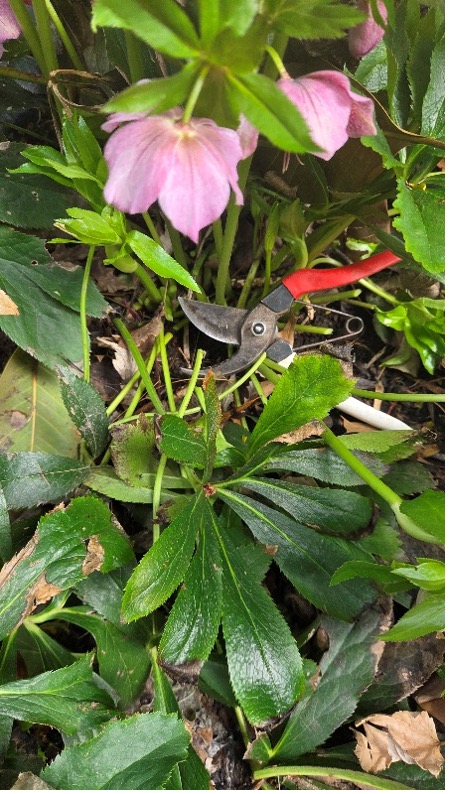
Using a secateur, snip each leaf stem right down to the base where it meets the soil. When you do this you’ll often see the crown of the new flowers underneath — sometimes already beginning to unfurl.
The longer you wait into spring, the more complicated this job becomes. Distinguishing last year’s foliage from the emerging flowering stems takes some attention.
It’s a must do though. The old leaves will soon degrade but won’t detach, leaving the new flowers emerging through a clump of collapsing foliage.
With hellebores, flowers come first, so once the old leaves are removed the new stems stand beautifully on their own.
Fresh leaves will follow later — along with the second chore: deadheading.
But that’s a story for June.
If you haven’t gotten to this yet — get on it.
Liriope
Liriope is of much less concern.
Whether Liriope muscari or Liriope spicata, this tough groundcover can take almost anything you throw at it.
I usually cut it back:
- When I have time and nothing better to do.
- When the leaves start looking rough and I cant stand it anyomore.
- Most importantly — before new growth begins!
Liriope produces one flush of growth each season. Like hellebores, the previous year’s leaves degrade but don’t detach. They simply turn brown and tangle into the new growth.
If you cut too late and clip the emerging shoots, that cut will show all season long, so get it done early or regret it right in to summer!
How to
There are lots of ways!
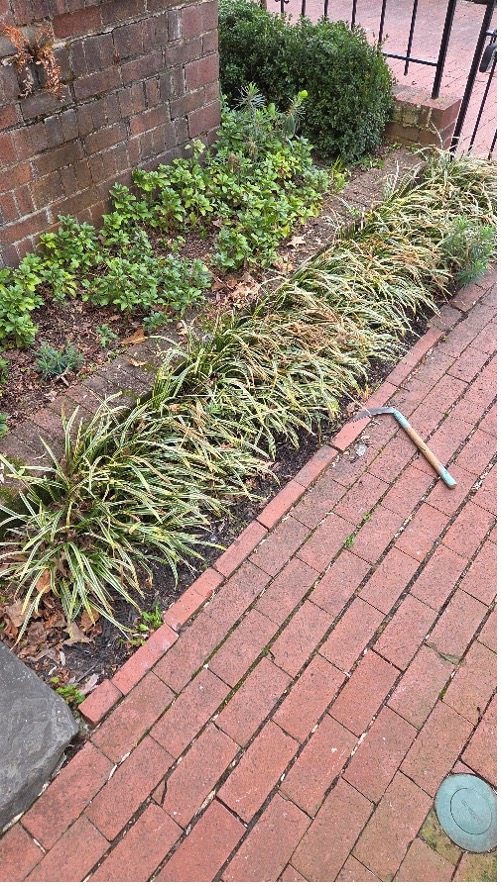
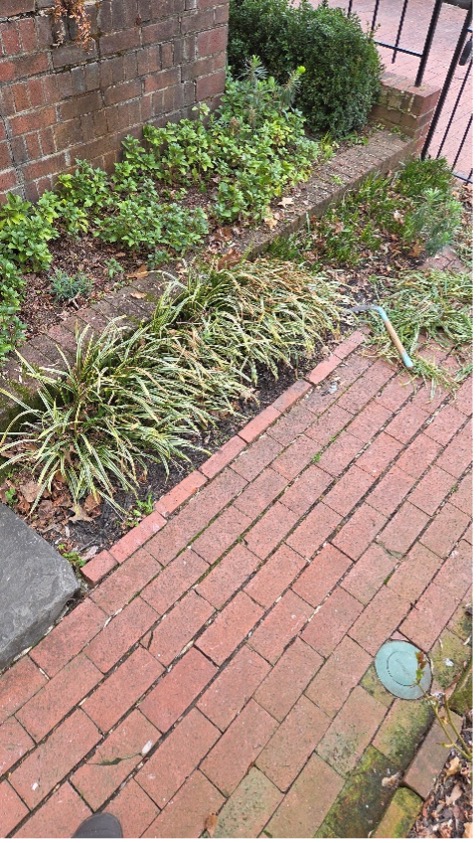
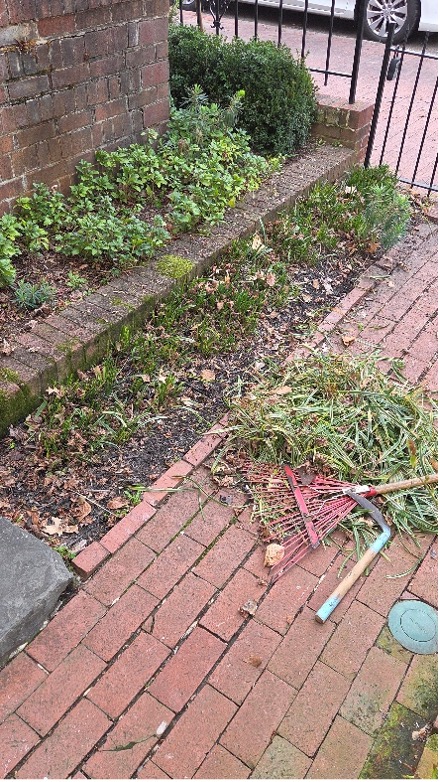
For large areas we like using a hand sickle. For smaller clumps, secateurs work perfectly well.
I suspect everyone has their own technique — let’s hear them in The Stream.
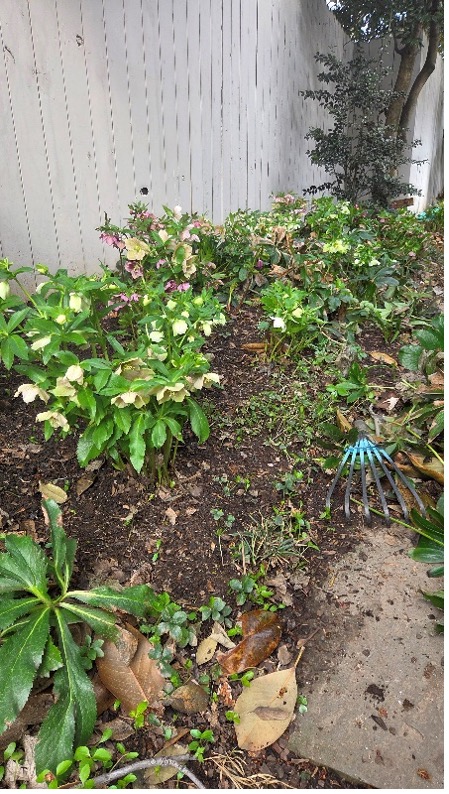
These photos show a start to finish – I did this little patch with a sickle in about 15 mins, including the cleanup.
A last word
Early spring also means many of us haven’t been actively gardening for a while.
Cutting back hellebores and liriope puts us in exactly the same posture: crouching, reaching, bending, lots of hand work.
Go easy out there.
This is exactly the moment when a gardener — full of pent-up spring energy — manages to strain something before the season even begins.