One of the biggest pushes of the spring season is boxwood renovation and shearing—especially with English boxwood (Buxus sempervirens ‘Suffruticosa’).
True English boxwood puts on one major flush of growth each year, beginning in March and usually fully leafed out by early May. This window is the ideal moment to get out the shears, secateurs, and maybe even a pruning saw—late enough that we are past the risk of cold damage, and early enough that the new growth has not yet hardened off.
Timing for this really matters. Shear too early and you risk exposing tender interior growth to late cold. Wait too long and the cuts will leave visible clipped leaves that persist through the season.
March into early April is the period when we can reshape, refine, or take a breath and consider a more serious renovation.
NOW WHAT?
First off, gather your tools. You will of course want your secateurs - which are probably already on your hip - but the main tool for this project is a good pair of garden shears.
My personal favorite for shears are Okatsune hedge shears, and I keep both a short shears for precise work, and a longer-handled set in my truck for when I need the reach. ARS and Dramm also make good shears, but every gardener seems to have a favorite. Having a good tool helps for this work. Good shears mean clean cuts, a better finish, and a lot less wear on your arms and back over the course of a long pruning day.
Shearing technique takes a little practice—maybe a lot. I worked for years as an apprentice gardener with a team that did a lot of this kind of work, and my old boss coached us well. He would have us ‘start our shears’ before ever touching a plant - getting warmed up and used to a constant rhythmic snipping, almost machine-like.
Speaking of machine-like, let’s take a moment to talk about electric shears. I do keep a pair of battery-powered shears available—they can be useful for initial passes on larger shrubs or hedges. They are no substitute for hand shears. A single long blade means all the cuts are on the same plane, resulting in crowded surface regrowth. Using hand shears allows for slightly varied cuts - growth from different angles - and gives much more control of shape.
So, use the electric shears if you need to for initial reduction, but it is always best practice to finish by hand.
Keeping the shears constantly moving, begin clipping over the surface of the shrub or hedge—shears clipping consistently, arms and feet moving too, around the shrub or hedge. Shearing is less like making individual cuts with secateurs and more like using the tool to continually reduce and shape—small clips at a time. It’s like carving the new shape of the boxwood out of the old wood.
These small snips have another advantage—they are tiny and shake right out of and through the plant. You can use the tips or flip the shears and use the handles to knock and shake clippings loose.
PRUNING STYLES IN PRACTICE
If your boxwoods are more or less the size they want to be, a light shear to shape is all you will need to do—enough to remove a bit of last season’s growth and any winter damage. True English boxwoods don’t grow but a few inches a season, and depending on the variety, some even less, so a freshen up to shape may be just enough.
Sometimes, however, things have gotten a little out of shape or scale. Maybe a few years without pruning, or maybe just time for a change. This is when it’s good to draw a breath and get ready to go a little further.
All boxwood stems—even very old wood—are full of adventitious buds. If you cut back hard and remove all the leaves, new growth will sprout. English boxwoods are slow growers, so it may take a while—maybe half a season, maybe a full year—but they will come back.
This is called renovative pruning. It is not for the faint of heart, but it can be wonderfully rewarding in the long run. There will be moment when you make the first deep cuts that feel a little drastic—like you may have gone too far. But if you trust the plant, and give it time, it will respond. Now is the time!
PRUNING STYLES IN THE FIELD
I’ve recently been doing a good amount of boxwood pruning on a larger scaled project in Missouri. I visit these gardens often and have been working through pruning across the site over the past few years. I thought I would share some examples with you from recent work.
CLOUD PRUNING:

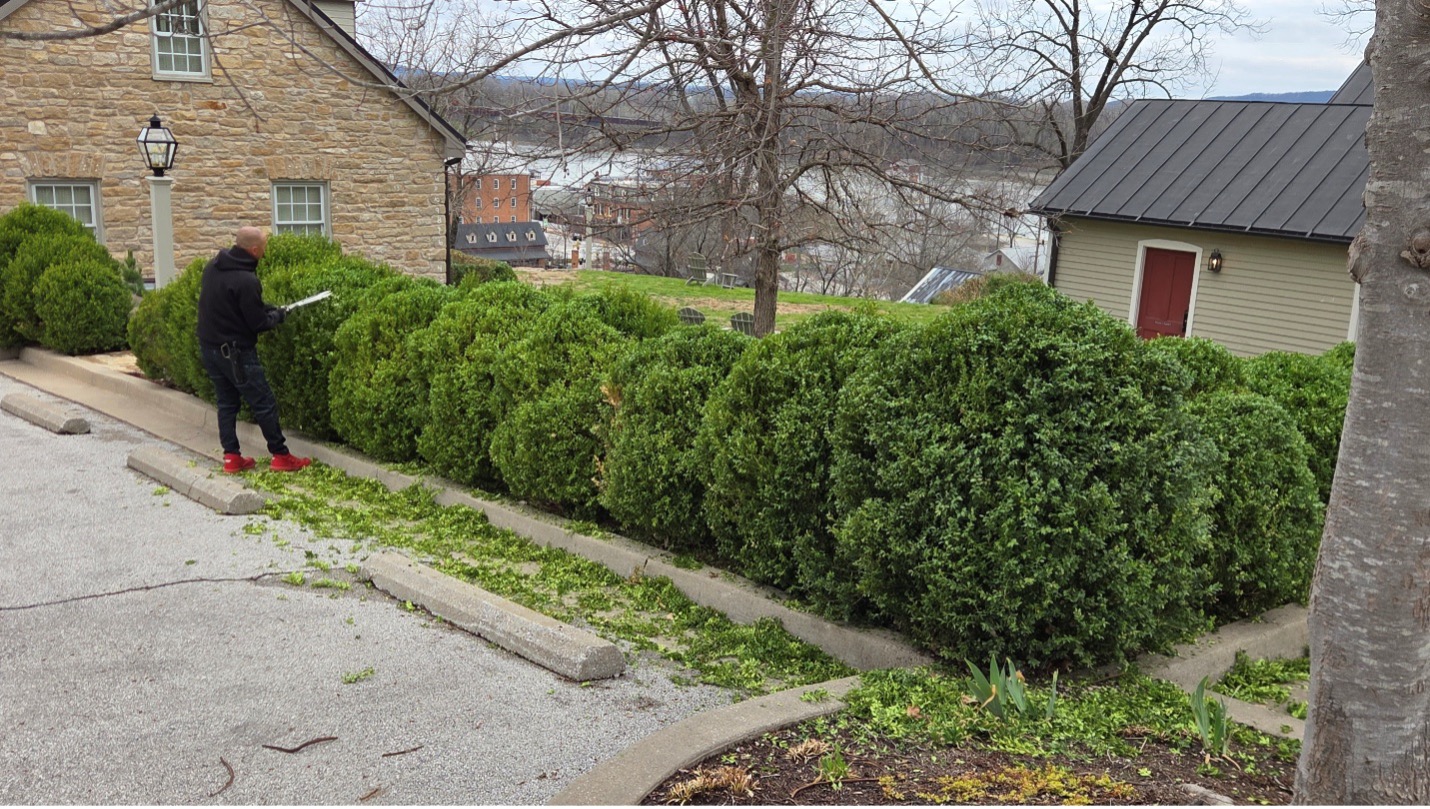
This ‘before and after’ of a shearing for a row of boxwoods in a cloud pruned style. We have been working with these for a few years, this season’s pruning is just to keep them in scale and add some shape and contour. This style of pruning exaggerates the natural shape of the boxwood – we clip away to reveal lobes of growth. Here we are keeping the boxwoods from pushing into the parking area, and of a height that we can see across but tall enough to provide security to a drop just behind the row. The shaping feels loose, natural, and (arguably) reduces possibilities of breakage from heavy snow.
HEDGING + RENOVATIVE PRUNING
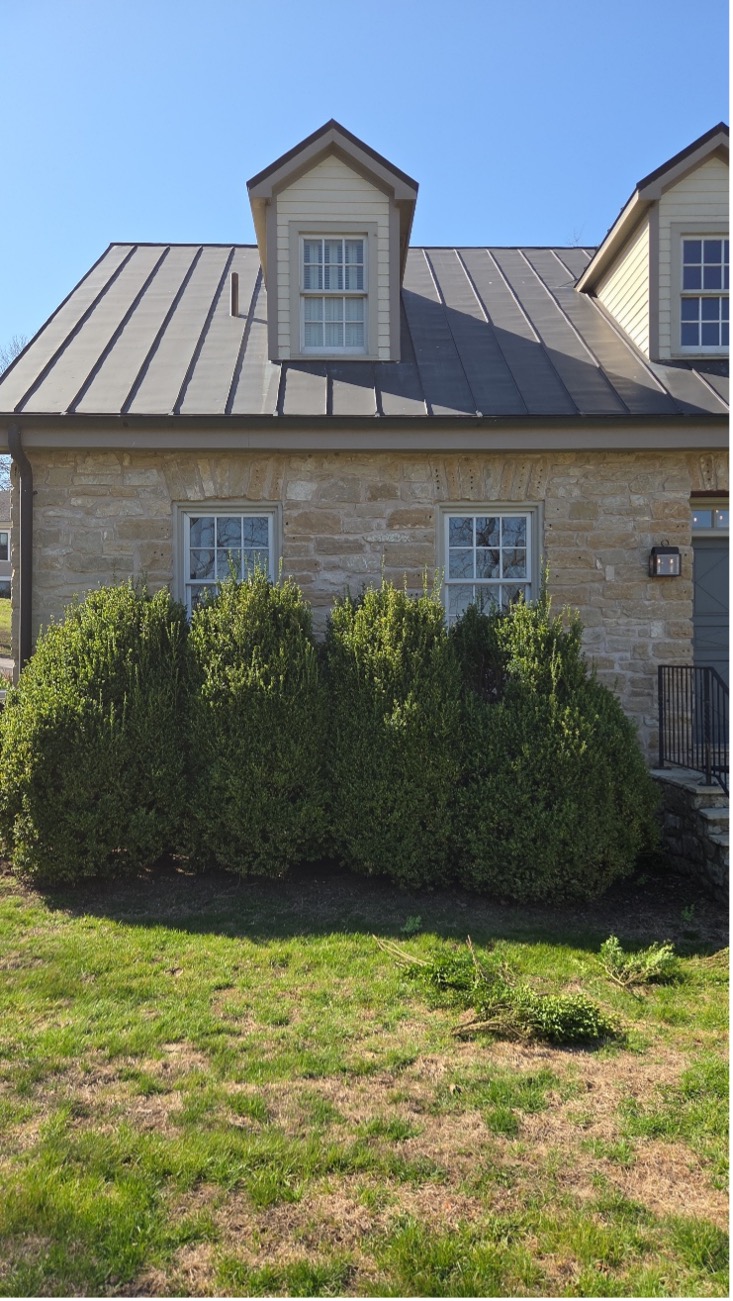
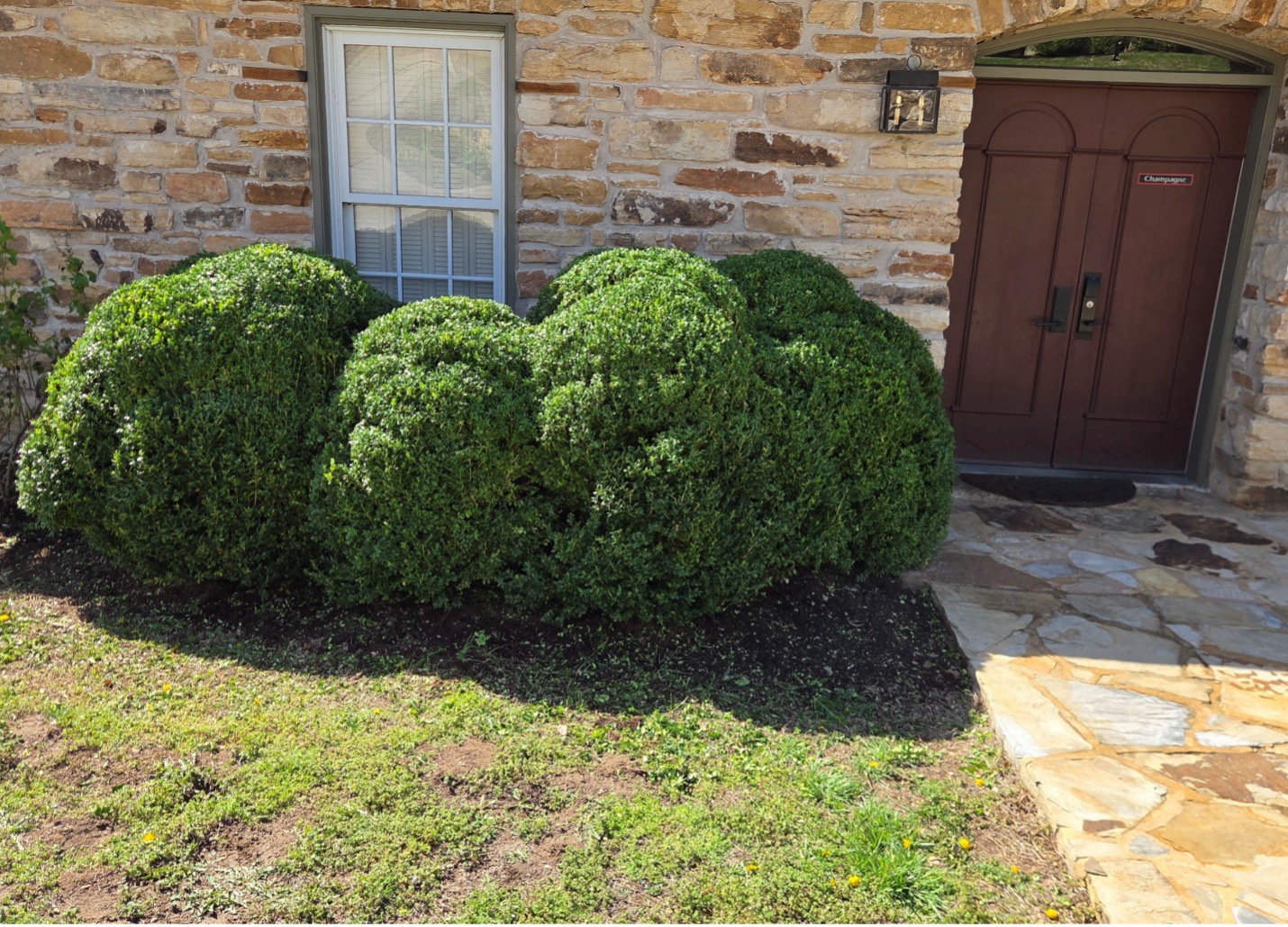
The set of 3 big American boxwoods above have been being kept in a cloud pruned style for a few years, but they have CLEARLY gotten out of hand! Obscuring an important view, I decided this season to enforce the importance of the windows and the architecture of this handsome stone cottage by ultimately renovating them down to a hedge style.
As you can see in the following the photo, I began by pruning back to well under the windows of the cottage as a start, all cuts with secateurs. Not yet certain if I was going to hedge, or maybe cloud prune, but definitely enforce and clear views from the windows. The hard cuts across the top left the shrubs pretty much ‘bald’, but exposed the new potential of renovative growth:
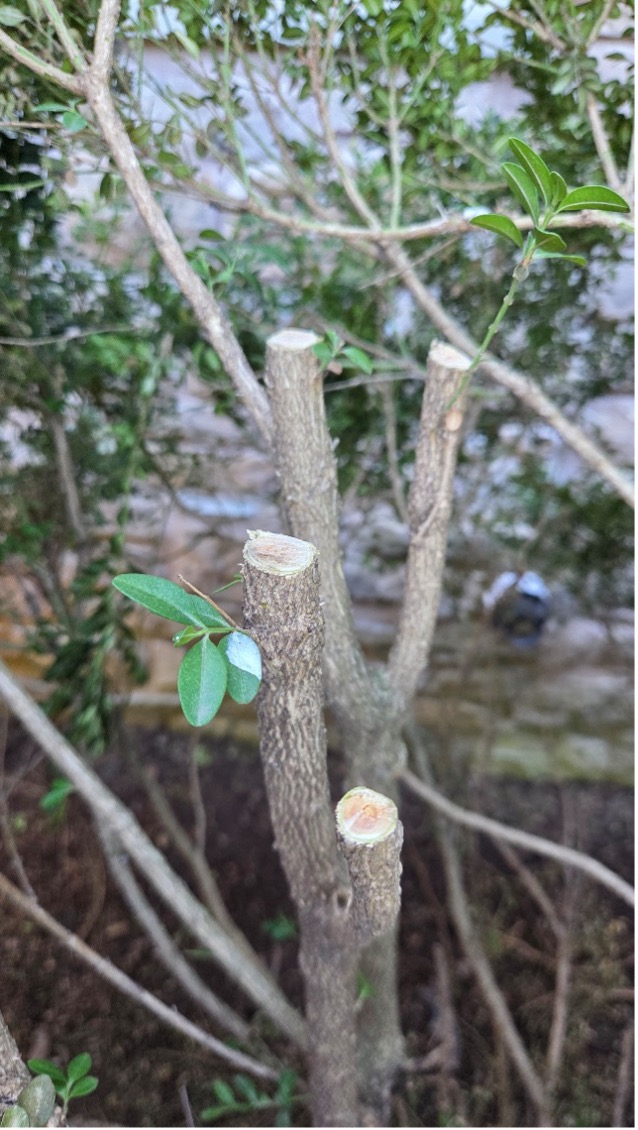
Once I had the windows exposed, I decided with certainty that a hedge was the way to go. Using some electric shears for quick reduction and following with shears and secateurs, i reduced back to :
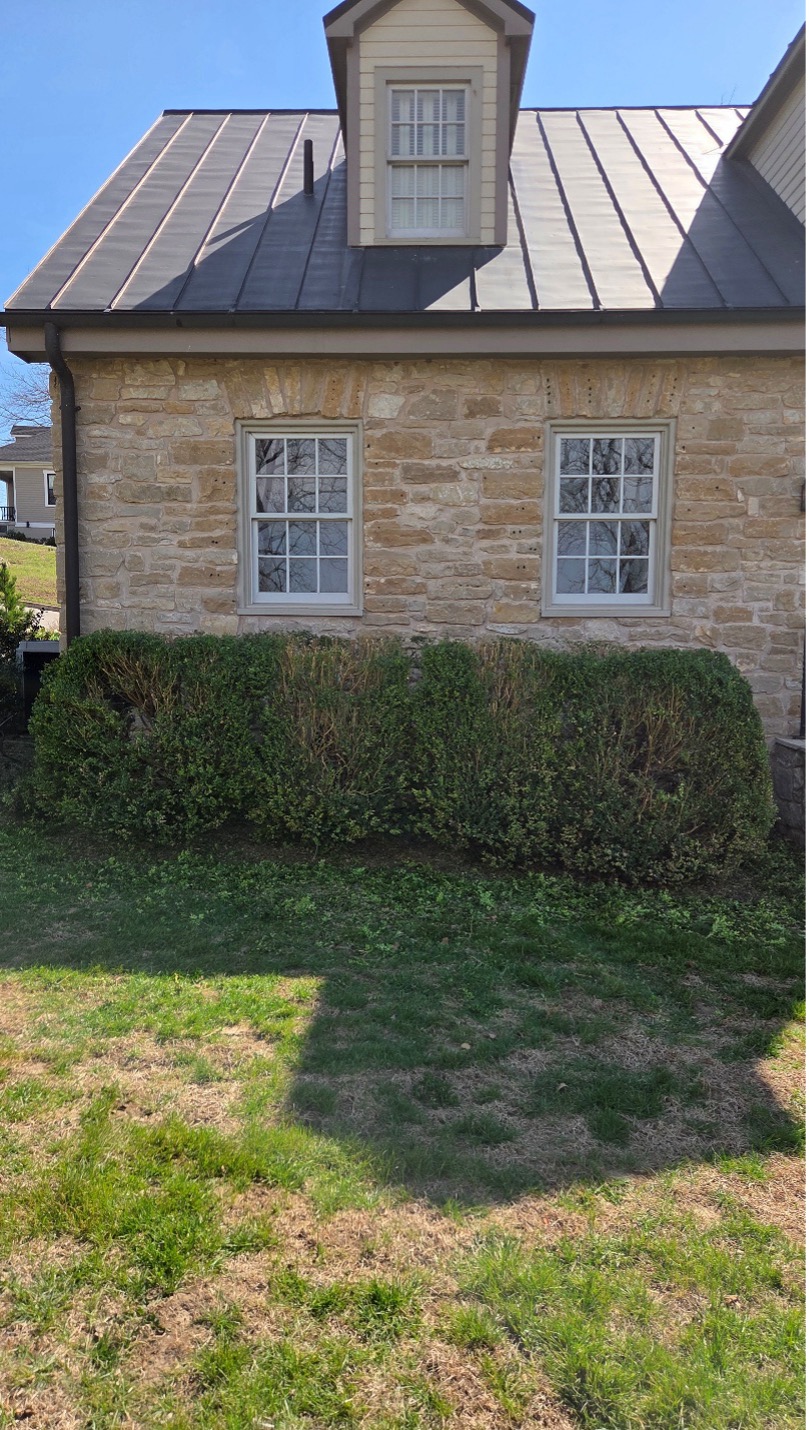
This hedge will be sipler to keep up with over the next years and makes sense for the windows and architecture of this sone cottage. With a series of these cottages aroudn the property, we vary pruning styles for different buildings. The following cottage does not have a particularily interesting view from this front window, so a little ‘cloud pruning ‘ is nice from both inside and out!
These are just a couple of pruning styles - there are many more: topiary, Japanese forms such as karikomi and tamamono, each with their own rules, guidelines, timing and logic. Let’s devote an hour to this sometime soon in A Growing Conversation!
Meanwhile, get your shears going!