There are several categories of hydrangea with one of the main distinctions between being their blooming habit, old wood or new wood. Hydrangea that bloom on old wood set their flowers in the summer and early autumn, hold them through the winter, and bloom the following season. Hydrangea that bloom on new wood set their flowers in the spring and bloom on their current season’s growth. At some point here we can go through all the varieties and distinctions, or everyone can dive into The Gardener’s Stream to discuss.
For this bulletin we will discuss the specifics of Oak Leaf Hydrangea and what to do when they get out of scale for the garden.
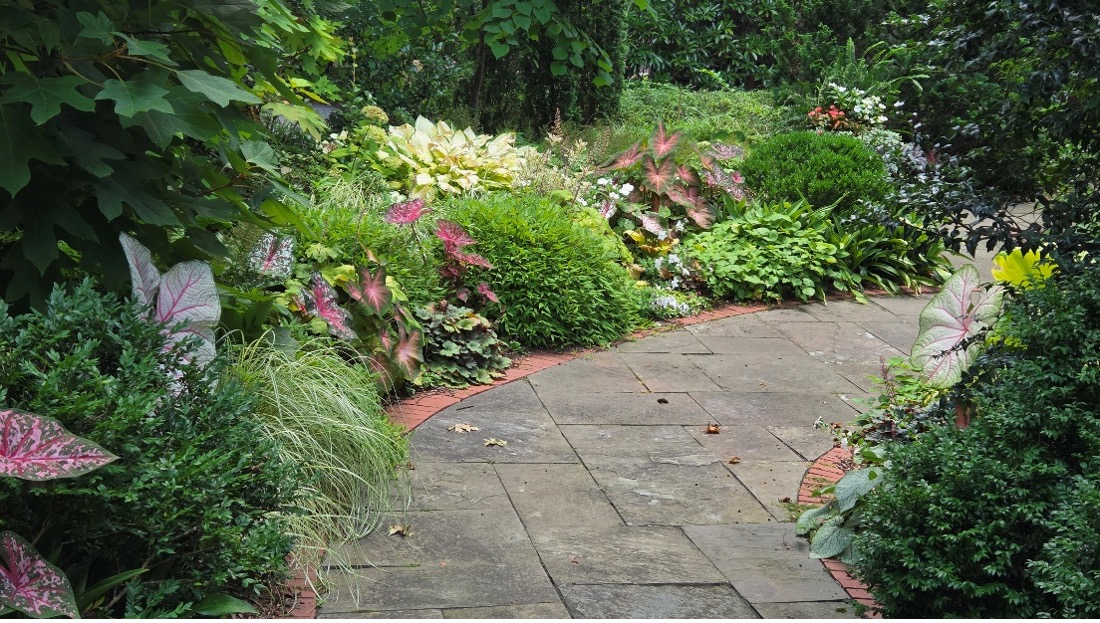
Oak Leaf Hydrangea (Hydreangea quercifolia) bloom on old wood, making them a challenge to prune without losing flowering in the following season. This is what has driven the (rather successful) push by growers over the last many years to develop smaller growing varieties. In this garden, the roughly half dozen old, unnamed variety oakleaf hydrangeas have gotten a little pushy. For the last several years I have been pinching them back in early summer, just after blooming, but this year I have decided to bite the bullet, forewarned my clients, and sacrifice a season’s bloom to get them back to scale in the garden.
Renovation time.
The ‘textbook’ time for renovation, when you might have a slight chance of some next season flowering, is immediately after the late spring bloom time - or even while in flower – have any friends getting marries or having a party – hydrangea flowers for everyone! This givies the plants the most possible time to re set buds for the following season and is true for all old wood bloomers.
I don’t always like this time for renovation for a couple reasons. Firstly, a hard cutback of hydrangea at the end of spring/ beginning of summer can leave a pretty big gap in the garden in what its better season. If it is one or two plants, maybe ok, but when you are taking back a mass planting of significant size, it can create a major void as things recover. Secondly, renovative pruning removes a lot of stem, and stem in leaf creates a lot more debris than stem without. So, if I am sacrificing bloom anyway, I think it’s just a well to wait until all the leaves are fallen and have been swept away. This way I can see the branching structure clearly, and I’m going to have less debris to haul off. Mid-winter to very early spring is the time to strike. For the project, we spent a day in the first week of March.
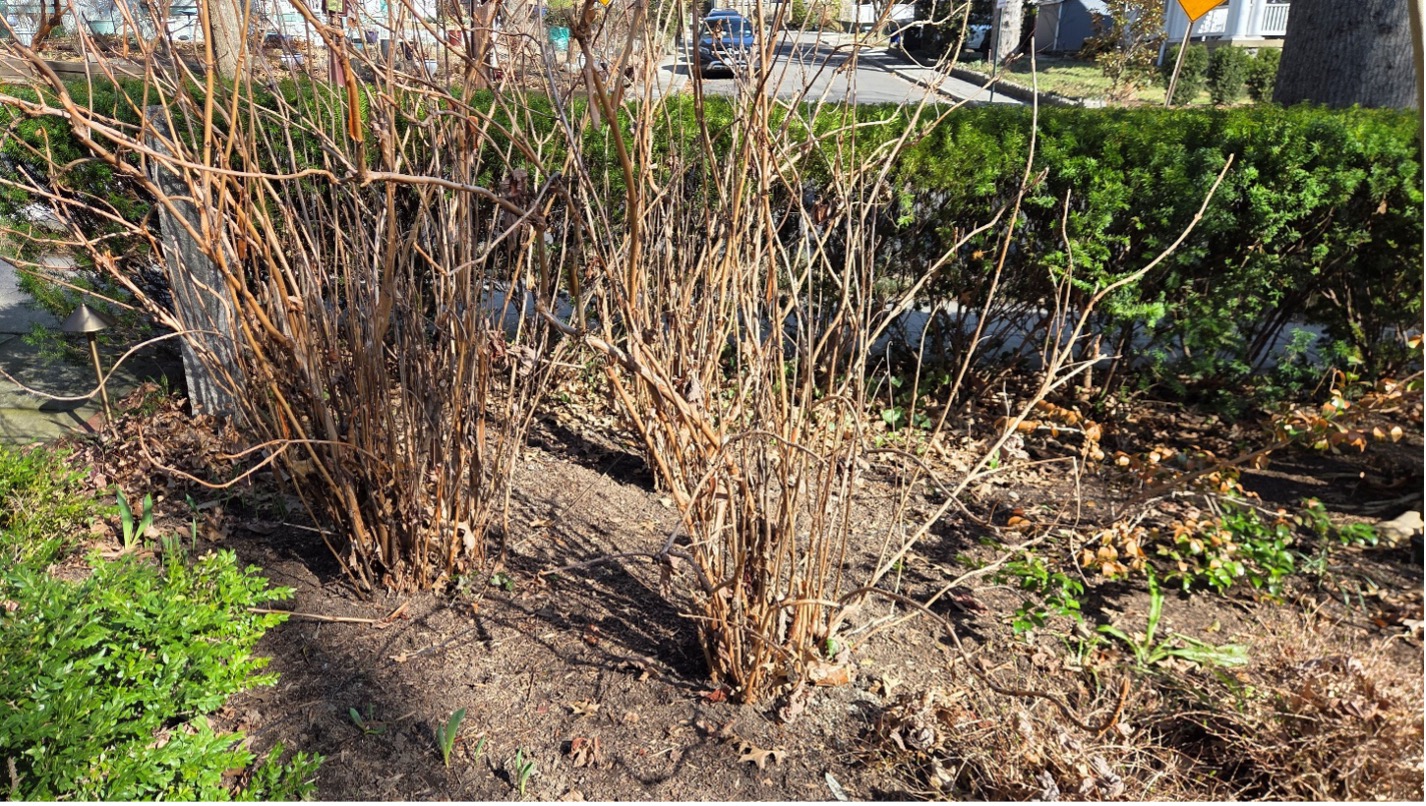
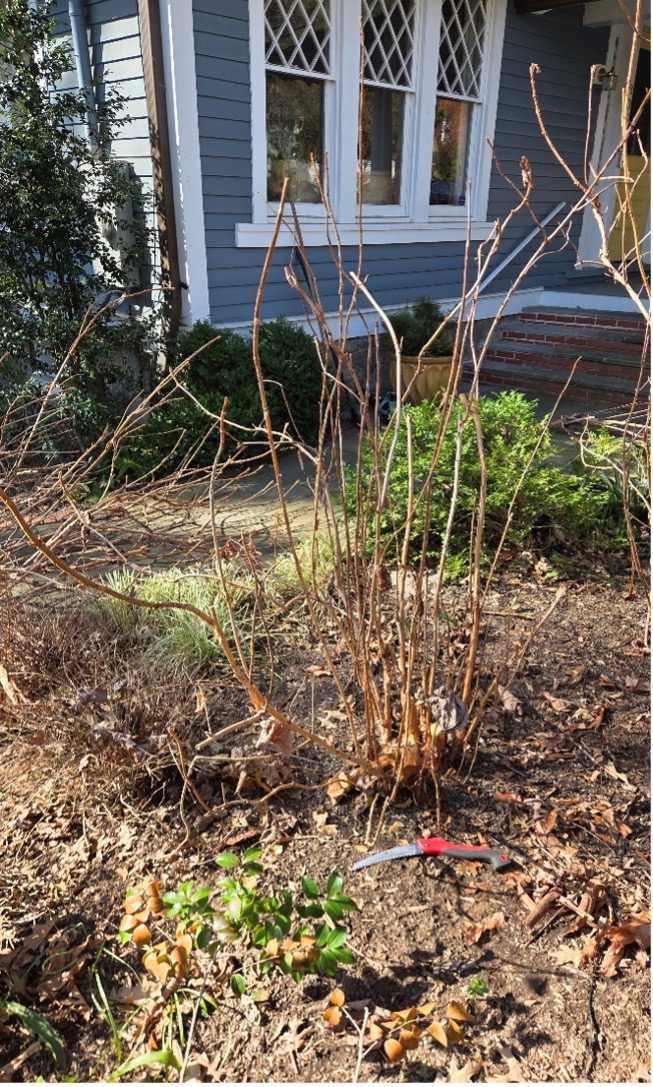
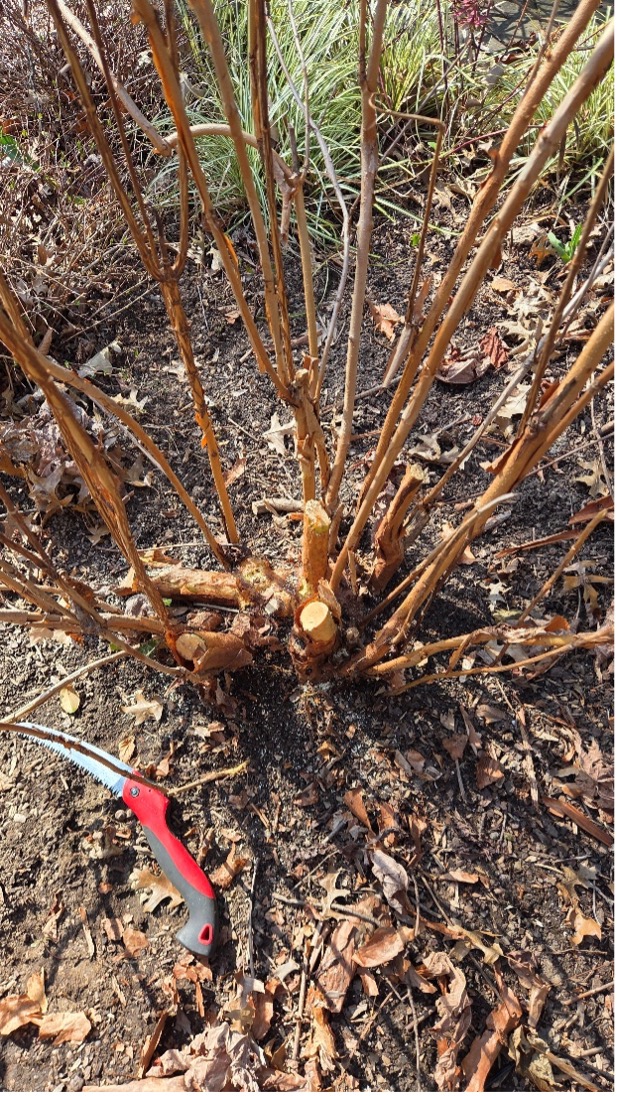
We’ll start this renovative pruning by removing the oldest wood. The canes on the leafless branches are easy to identify, and we take them out first sawing out as close to the base of the growth as possible, 2 or 3 stems for plants. This is also a great time to clear out any debris collected in the thicket of stems at base of the plant. Just a bit of hygiene for each shrub now that old canes are gone and there is so space to tidy up.
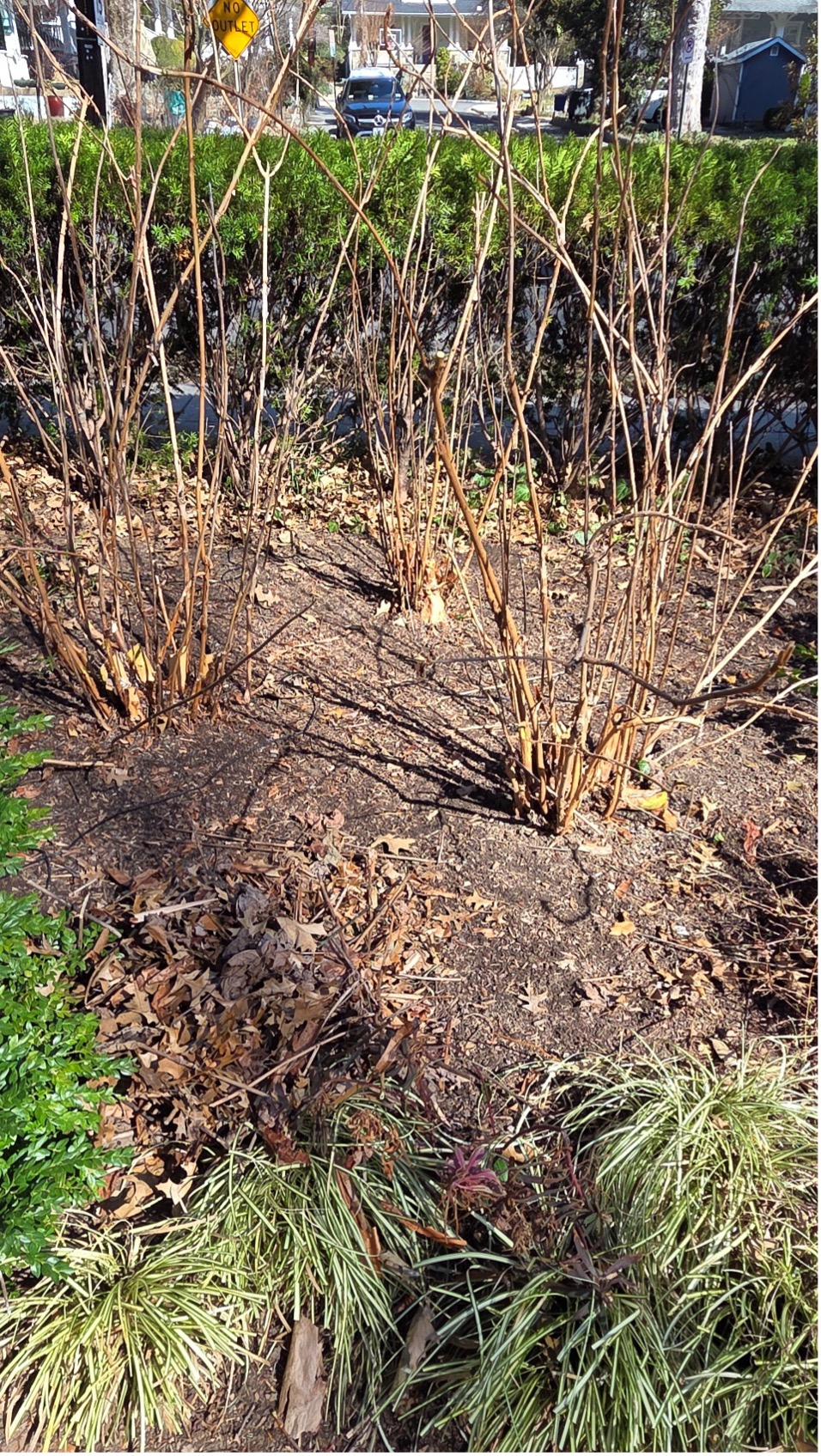
With canes removed there are now some options. Depending on the ‘future’ size of shrub or mass of plants you are looking for, you might decide you’ve done enough – leaving remaining stems for the coming season – you will have some flowers on these ‘previous season’s grown with a more open, airy plant (see above photos).
For this particular garden, I do want to lower the height of these hydrangeas significantly. Knowing that these plants will put on a good 2 feet of growth this season, I’m going to cut back with this in mind. You could cut them back to the ground and they will come right back up! The idea is of ‘placing’ the height of flowering it wants to be for next year. This is a technique we also use on ALL the hydrangea that bloom on new wood, a discussion for another bulletin or maybe a hydrangea centric ‘A Growing Conversation’ sometime!
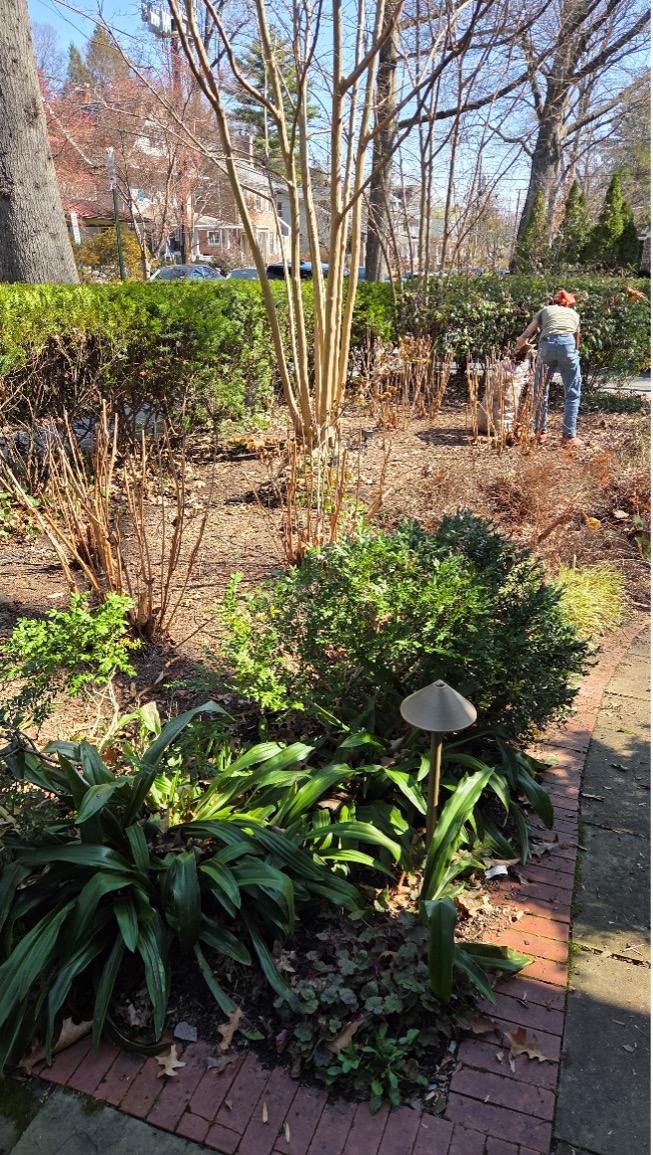
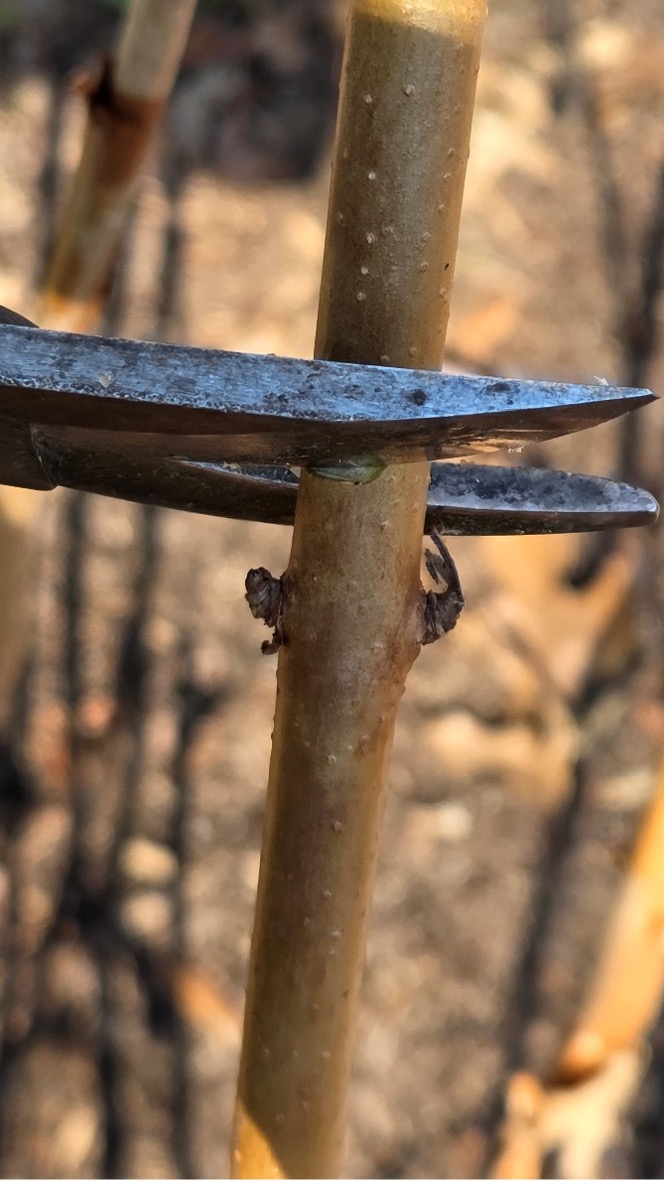
Cutting the stems back to a good 2 ‘ below where I would like to see the flowers across this whole stand of hydrangea, looking for a cut nearest to a lateral bud. This will set us up for the growing season (as in the above photo). If I wanted, I could cut them back right to the grown (which I sometimes do).
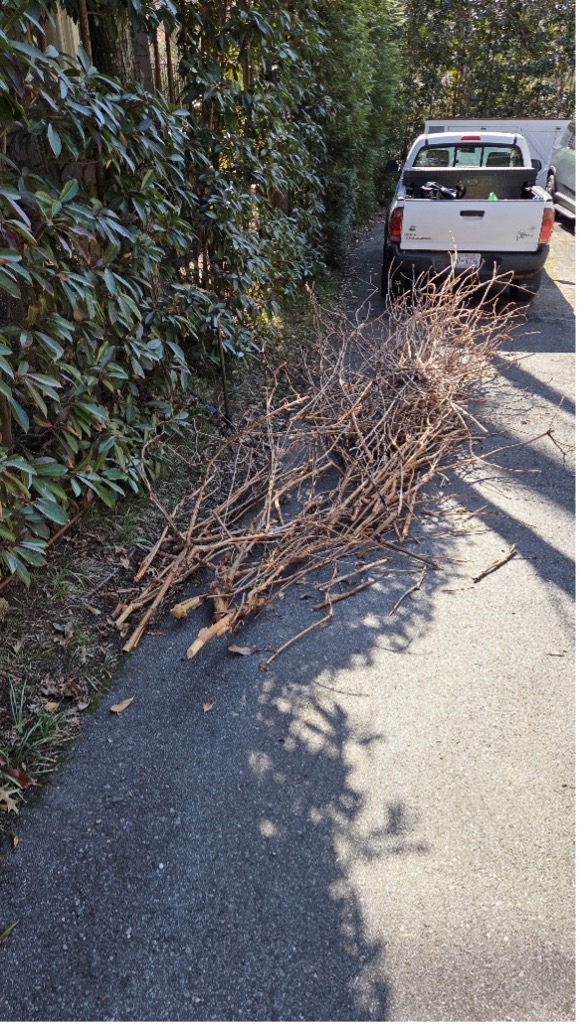
A last comment about debris and cleanup – be prepared! This renovative pruning generates a LOT of debris! You can use a lopper to break down the stems, but it’s a big ‘haul off’ at the end – these dry stems not much good for the compost, we load the truck and off to the city’s recycling program.
This renovative technique we use more broadly with hydrangeas that bloom on new wood — though that’s a conversation for another TWIG, or perhaps a hydrangea-focused A Growing Conversation.
For now, it comes down to resolve — and a bit of patience.
No flowers this year, but a better plant, properly scaled, and ready to perform again in 2027.