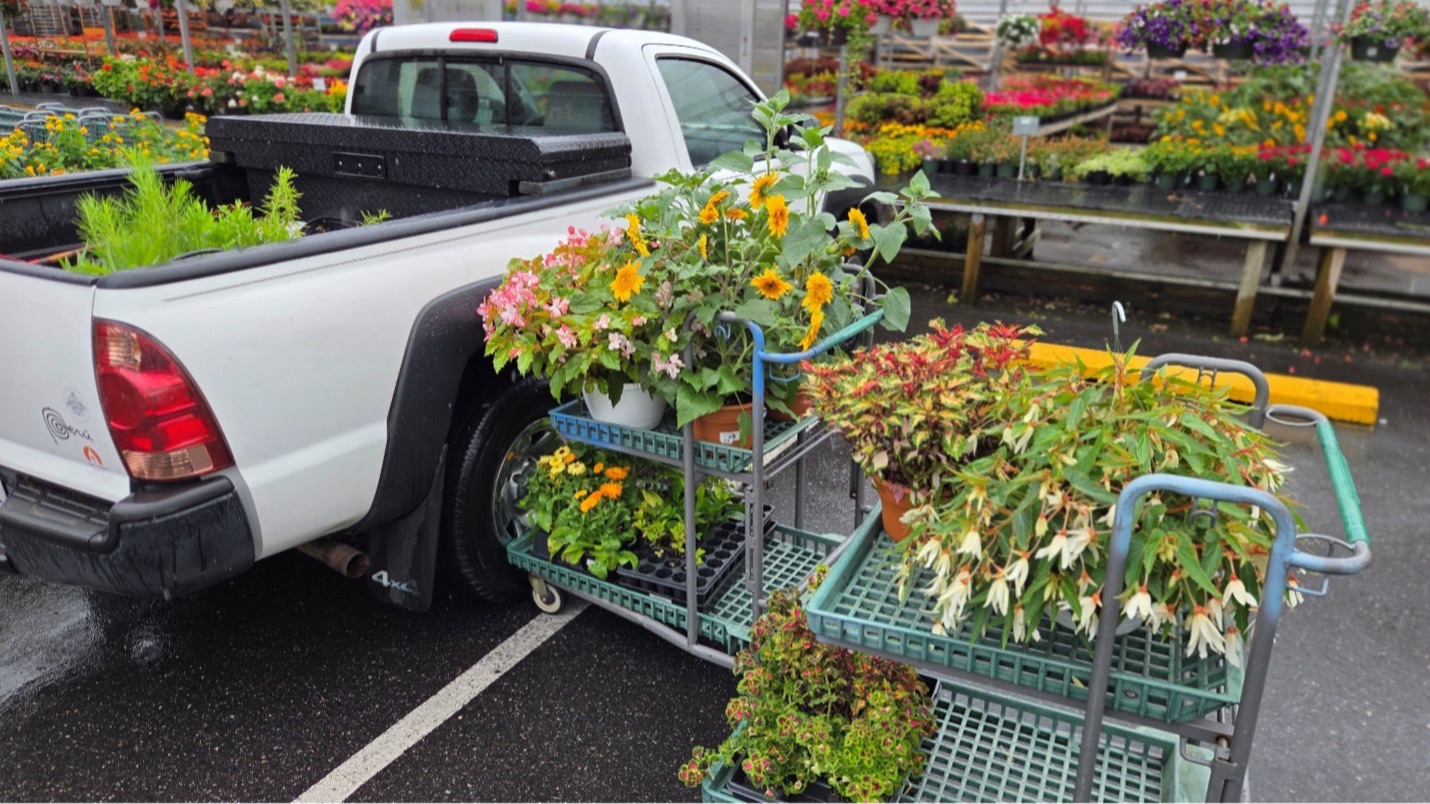
Peony season is upon us.
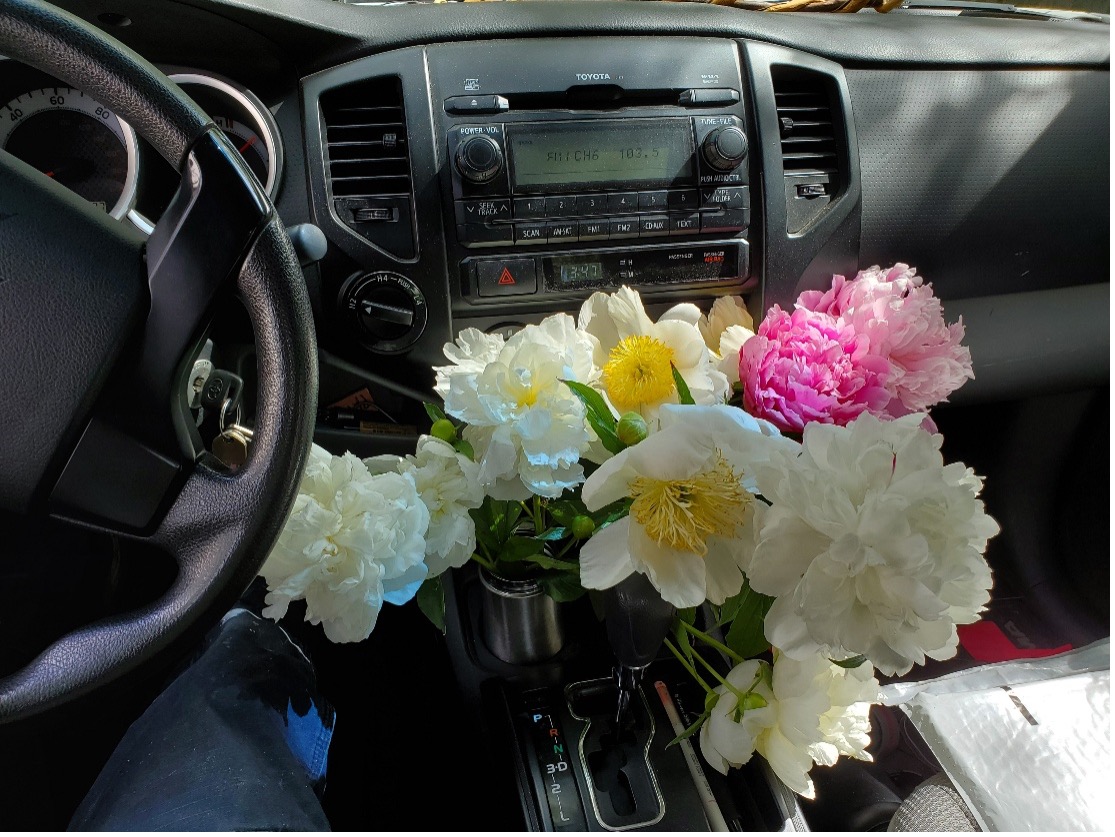
From now through about Mother’s Day, we get the thrilling arrival of these late-spring flowers. I grew up in southern Indiana, where there was a row of old herbaceous peonies down the back hillside, growing at the feet of old-timey bridal wreath spirea. I loved to cut them and bring them in to my mom — ants and all.
The cycle of peony flowering gives us something to fawn over for maybe a month, from mid-April to mid-May.
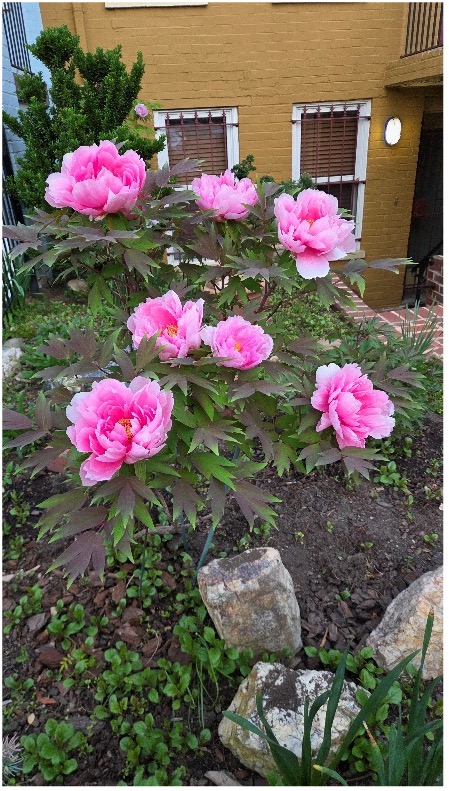
First come the tree peonies, with their amazingly large flowers — like something from a clown’s lapel. These are woody perennial shrubs, their stiff stems staying up through the winter, and they generally do not need staking to support their humongous flowers.
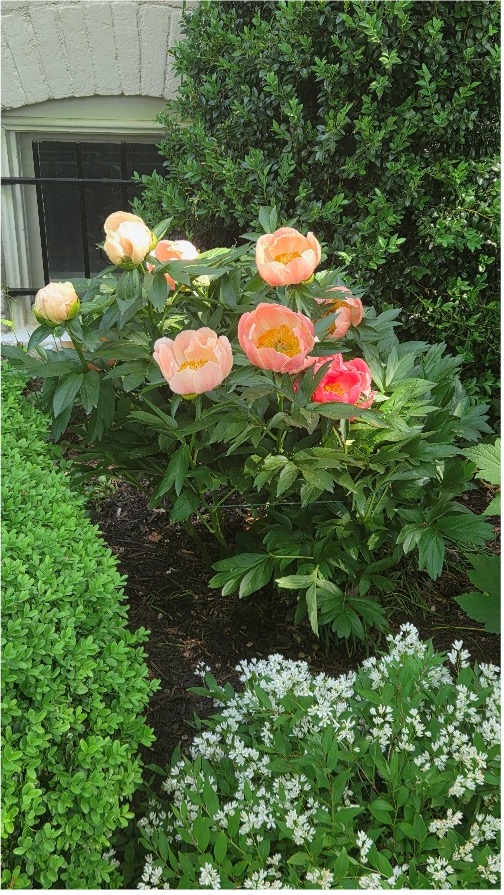
Next to flower are the Itoh peonies. Relatively recent arrivals — introduced in the U.S. in the late 1960s — they are hybrids of tree peonies and herbaceous peonies. They have a wild range of amazing flowers and strong stems that usually do not require much staking.
What I want to talk about today, though, are herbaceous peonies, like the ones in the first picture pilfered from one of the gardens and on the way home in my truck. These are our long-loved, long-living, reliable late-spring bloomers. I think of them as among the most nostalgic of perennials.
Herbaceous peonies are very long-lived and require a minimum of care. There are some specific rules — but that’s not what today’s bulletin is about (drop any care questions into the Gardeners Stream).
What we are paying attention to this week in the gardens is getting staking in place for bloom time.
Staking peonies
This is a must do for most of the common varieties. Those wonderful, frilly double flowers — like big scoops of ice cream — will be flopped down and melting on the ground with the first three drops of rain without some support.
There are lots of ways to “support” peony flowers, and I’m sure you all have your tricks. There are many commercially available staking systems — hoops, grids, arches. They all work great… if they’re put in place before the flowers start to push up.
Here is my own problem with these:
- I am usually too distracted with the spring tulip show to notice that the peonies need their equipment put in place, and
- Storing all the googaw, finding it when I need it, and putting it away once flowering is finished… not a strong suit for me.
I had the privilege, as a young gardener, to work with a team — for a good dozen years — who were committed to excellence in garden practices. It was there that I learned some very good staking techniques.
The equipment needed is relatively simple. The technique requires some practice and a bit of finesse — but the results are what matter. I hope this coaching helps keep your peony flowers standing up through the bloom season.
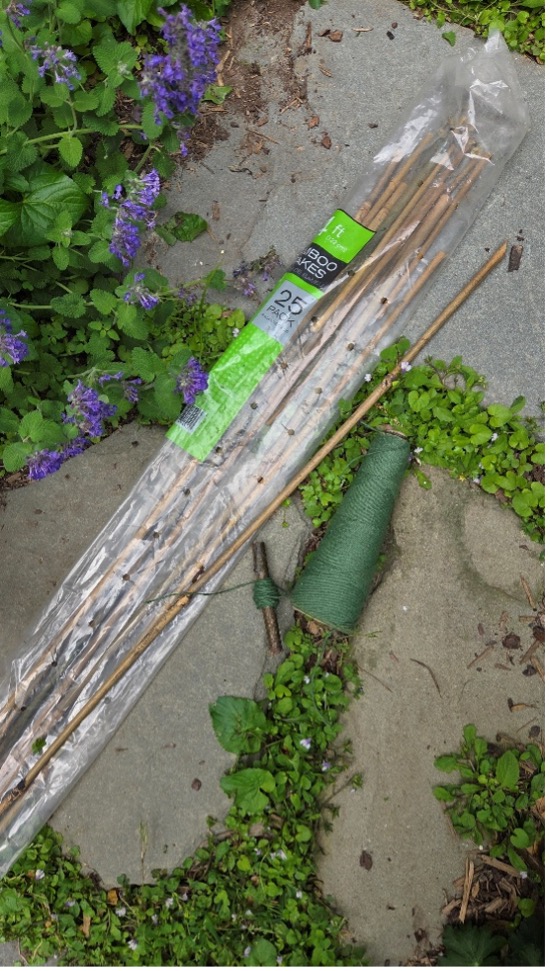
Start by collecting your equipment:
A good number of tall (about 4') green bamboo stakes — usually available at any hardware store or garden center.
Some string or twine — preferably green — in generous quantity.
And your secateurs, always on your hip in their holster.
Assessing your plant.
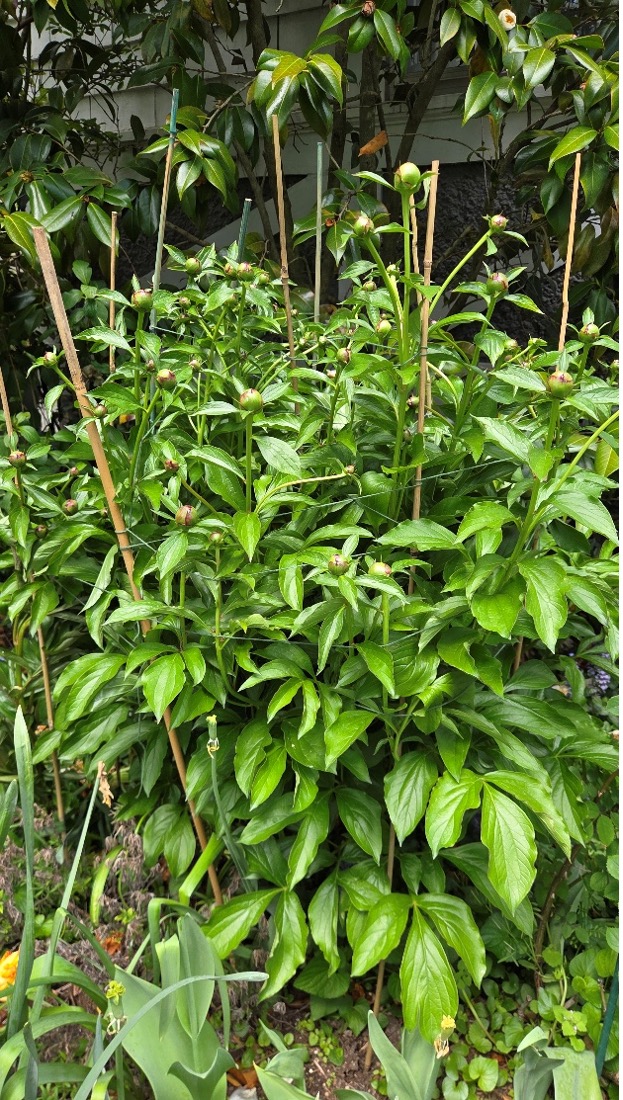
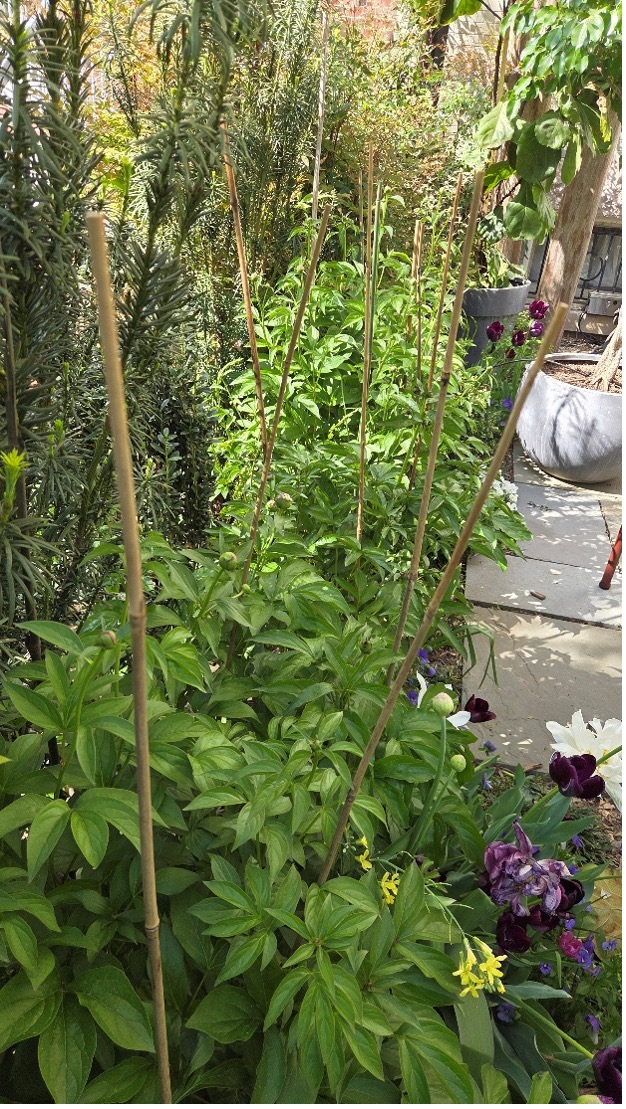
You’ll want to place an odd number of stakes around the perimeter of the peony, spaced roughly 12–18 inches apart. If the plant is smaller — say with only six or seven buds — you may need only three stakes. If it’s pushing twenty flowers, it could take seven or nine.
If you’re working with a longer row of plants, you can think of them as a group — driving stakes around the perimeter of the whole crowd rather than treating each plant individually.
A word about setting the stakes in:
If it has been dry, getting them securely into the ground can be a challenge. Using your secateurs to snip the end at an angle — creating a sharp tip — helps enormously.
Drive them in firmly — you want them to hold their ground once the weight of flowers and spring rain start leaning on them.
Now it’s time to use your string or twine to sew the support.
You will use a good length for this work. If you’ve got a ball of twine that fits nicely in your hand, that’s perfect.
We use a lot of this material, so I tend to acquire it by the skein — a particular string that I like — and then spin it onto a short piece of bamboo that fits comfortably in my hand. It makes the whole process easier, a bit more deft, and keeps things moving along.
Now, with string in hand, and starting about halfway up the height of the peony, make a full pass around the entire plant or stand, looping the string around each stake as you go.
A single loop will slip, allowing for adjustment. A double loop will hold — stabilizing the structure.
Here is where the finesse starts.
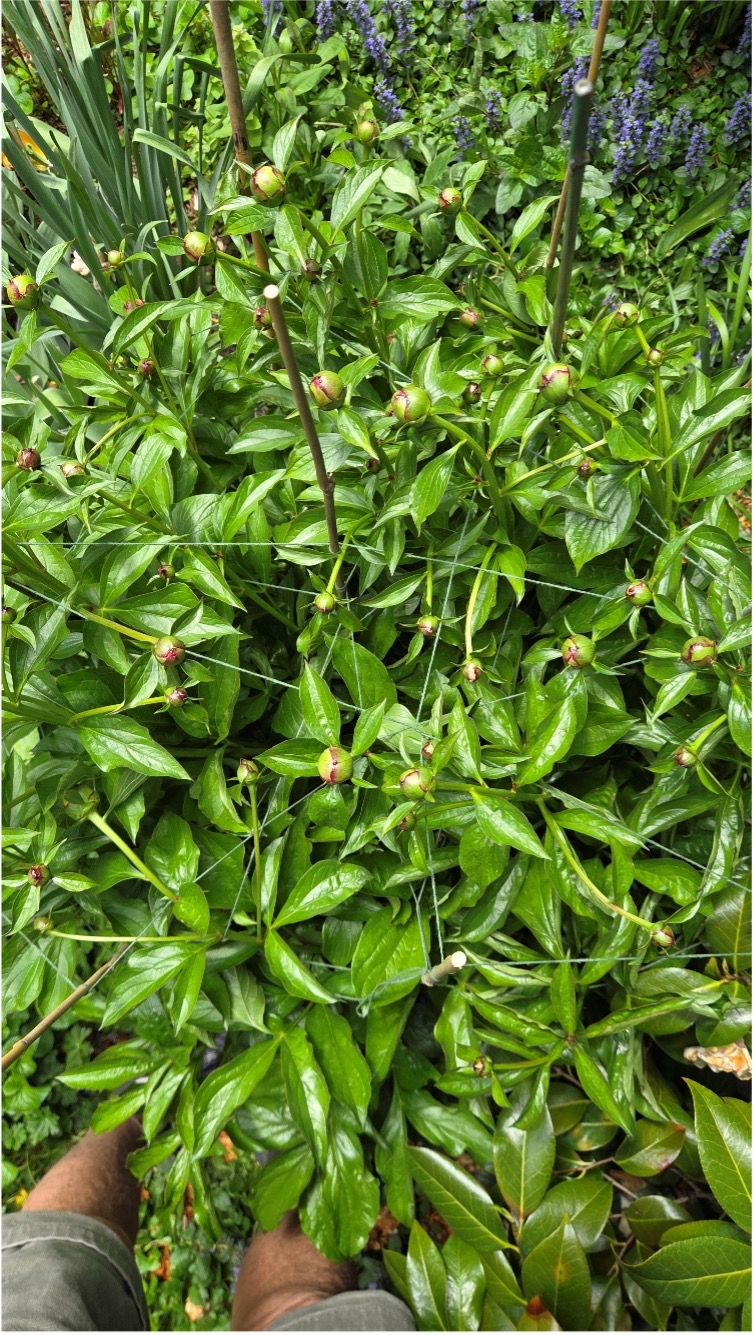
With that first surrond complete — supporting the whole — you can now move up, closer to the level of the flowers.
You might begin with another outer ring, but very quickly you can start passing the twine through the flowering level, moving between opposing stakes and gently dividing the flower buds into the triangular quadrants you are creating.
I like to think of it like a spider making a web meets a florist creating an arrangement.
Once you feel like you’ve got the flowers pretty evenly distributed, tie off the end to one of the stakes. From there, you can make little adjustments — moving flower buds where you want them, or adding an extra line here or there.
Like I said, this can take some practice and finesse. What you are looking for is loose, yet supported — not trussed or in bondage.
If you feel like you haven’t got it quite right, just back it up. You can easily “reverse” by spooling the string back and trying again.
Once you’ve got all the blooms where you want them, you can decide what to do about the height of the stakes.
Some people like to clip them off so they are unseen. If I’ve done a nice staking, I don’t mind seeing a bit of stake sticking up — I think it says something nice about the quality of care.
I will sometimes snip all the stakes off to the same height so things feel intentional.
And finally, returning to the theme of “reversing”:
Once the blooming is complete, you deadhead the flowers away. The plants no longer need the stakes. You can spool the string or twine back up and pull the stakes for reuse. The taller perennials in the back of the border are waiting for them!
Nothing to store, everything reused…